WorldUrda, Spain · Europe
Spain Train Crash: Researcher Marta Shahbazi Missing After Collision Near Urda
Marta Shahbazi, a 41-year-old embryo researcher at Cambridge, was in the first car of the AVE that hit a stationary train near Urda in Spain. Her family is waiting for word from the authorities.
By Marcel
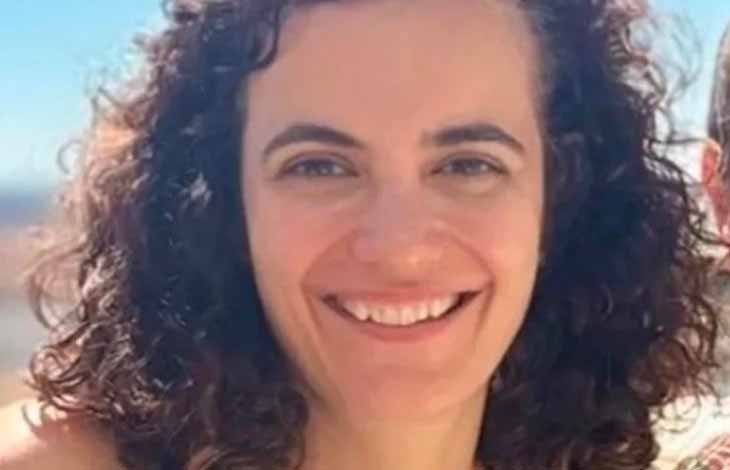
Biologist Marta Shahbazi is missing after the train collision near Urda, in the province of Toledo in central Spain. Her brother, the physicist Carlos Shahbazi, confirmed this to the newspaper El País. Shahbazi, 41, leads a research group in Cambridge. She was aboard the high-speed train that collided with another train on Wednesday, Oct. 28.
The AVE was traveling on the Madrid–Seville route when it hit a train operated by Iryo that was standing on the same track. Shahbazi had a seat in the first car of the AVE.
According to the Delegación del Gobierno, Spain's government delegation, the Guardia Civil has identified 13 of the 69 people killed.
Family clings to last hope
"We know nothing about her. The probability is very low, but we are clinging to the last hope," Carlos Shahbazi said on the phone. The family has had no word from the authorities since the day of the crash, he said. Her parents reported their daughter missing at the time and, just in case, provided DNA samples.
In a statement, her brother described her as a wonderful, loving, happy person who worked tirelessly. He also made serious accusations: his sister's life, he said, had been brutally struck by an incompetent and corrupt government and equally incompetent and corrupt public institutions.
According to the National Center for Cardiovascular Research (CNIC), another scientist was traveling in the same car, also headed to a conference in Huelva. She too is missing.
On her way to an award
Shahbazi was on her way to the congress of the Spanish Society for Developmental Biology, which began Wednesday in El Rompido, in the province of Huelva in Andalusia. There she was due to receive the society's prize for scientific excellence.
She heads a group at the Laboratory of Molecular Biology in Cambridge, whose researchers have won a dozen Nobel Prizes. Her team studies the first days after fertilization, when a single cell formed from an egg and a sperm begins to divide, the start of a human being made up of 37 trillion cells.
Shahbazi graduated at the top of her class in biology at the Autonomous University of Madrid and moved to Cambridge in 2014. There she led a project in which human embryos were cultured for 13 days outside the womb in a laboratory dish, almost twice as long as the previous record.
She has had her own group since 2020. Her central question is how a cell in an embryo only a few days old decides whether to become brain, skin, lung or heart. She focuses on implantation in the uterus, a phase in which about 30 percent of all human pregnancies fail.
Shahbazi earned her doctorate in 2013 at the Spanish National Cancer Research Center (CNIO). She received the International 3Rs Prize in 2020 and the Suffrage Science Award in 2024.
Roots in León and Iran
Shahbazi was born in León. Her mother is a primary school teacher from the village of Carrizo de la Ribera in the province of León. Her father comes from Iran and emigrated to Spain after Ayatollah Khomeini took power. She has a seven-year-old daughter and a three-year-old son. Since her daughter's birth, she has called herself a "mother who is a scientist" and campaigned for the right to be a "full-time mother and full-time scientist."
Her team works with surplus embryos from fertility clinics that were donated to research and would otherwise have been destroyed. In a 2019 interview with El País, she said: "People may think we almost have babies in the lab, but these are really the earliest stages of development. They are really very small, like a grain of sand."
She said at the time that she was comfortable with the internationally applied 14-day limit on embryo research, because up to that point an embryo can still split into twins. In her words: "Day 14 is the moment when the concept of the individual really emerges."