WorldWashington, D.C. · Americas
James Comey: Third Indictment Against Former FBI Director Under Espionage Act Unsealed
The U.S. Justice Department accuses Comey of disclosing national defense information in October 2016. The charges were filed exactly ten years later.
By Marcel
Automatically translated from German · may contain errors · Read the original
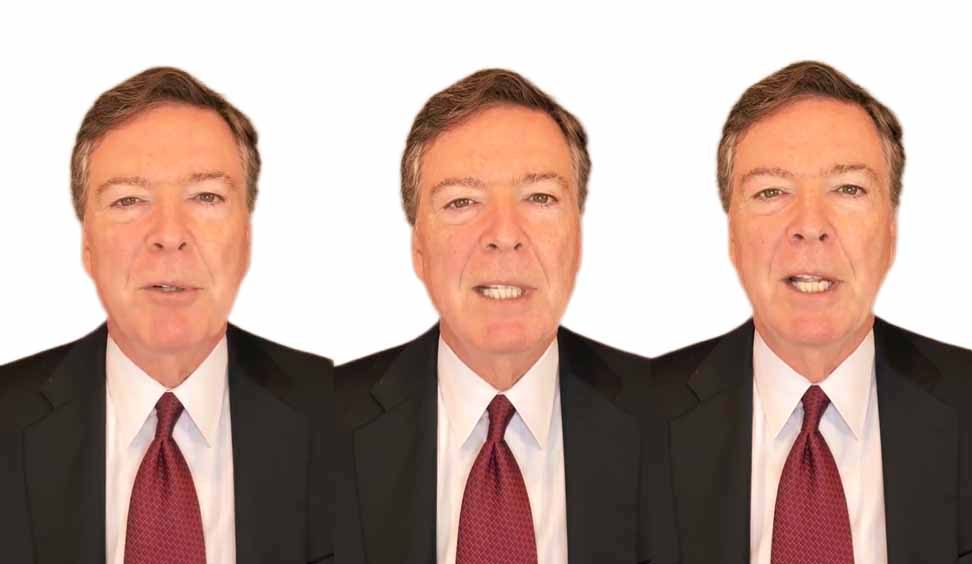
A third indictment by the U.S. Justice Department against former FBI Director James Comey has become public. A federal court in Washington on Monday, Oct. 26, unsealed two counts under the Espionage Act. Comey allegedly disclosed national defense information without authorization in October 2016.
The department had already filed the charging document on Oct. 5, exactly ten years after the alleged offense. It remained under seal until Monday. Judge Trevor N. McFadden ordered it unsealed at Comey's request. Comey denies the allegations.
Charges filed on the tenth anniversary
According to the charging document, Comey knowingly and willfully transmitted defense information to an unauthorized person in the District of Columbia on or about Oct. 5, 2016. He allegedly had reason to believe it could harm the United States and benefit a foreign nation.
The second count is conspiracy. Comey allegedly directed a person referred to as "Individual #1," through one or more co-conspirators, to pass the information to a reporter at a national news publication. The three-page document contains few further details. Comey's attorneys link the case to a New York Times article from Oct. 5, 2016.
The document is a so-called criminal information, a charging document that prosecutors file without involving a grand jury. The department described it as a "waiverless criminal information" intended to toll the statute of limitations. For willful violations of the Espionage Act, the limitations period is generally ten years.
The department said the approach is established practice and has been approved by several federal appeals courts. It said the matter is an ongoing investigation and that it would not comment further.
Defense seeks dismissal
Comey's attorneys have already moved to dismiss the charges. In their motion, they argue that the ten-year limit is preserved only by a grand jury indictment. Prosecutors countered on Oct. 23 that an information also preserves the deadline and that the motion was premature. McFadden wrote that the court would address the motion's remaining issues later.
"Mr. Comey steadfastly maintains his innocence," said his attorney Patrick Fitzgerald. For the third time in a little more than a year, he said, the department is trying to prosecute Comey. Two teams of prosecutors had examined the New York Times article during President Donald Trump's first term and both times brought no charges, he said. Now, ten years later, an information follows without approval by a judge or a grand jury. "It purports to accuse Mr. Comey of crimes he did not commit," Fitzgerald said.
Comey himself commented on the indictment in a video, saying: "They're back." He said he is innocent, will not be intimidated and trusts in the independent federal judiciary. The coming years will be hard, however, Comey said.
Two earlier attempts to indict
In September 2025, the department charged Comey in the Eastern District of Virginia with making a false statement and obstruction of justice. The case concerned his testimony before the Senate Judiciary Committee on Sept. 30, 2020, that he had not authorized anyone at the FBI to serve as an anonymous source in reports about the investigation into Hillary Clinton's emails. A court dismissed the indictment on Nov. 24, 2025, because interim U.S. Attorney Lindsey Halligan had not been lawfully appointed.
The indictment referred to a "Person 3," who was later identified as Columbia law professor Daniel Richman, a close confidant of Comey's. According to the website Mediaite, the department had subpoenaed Richman in late August. The new charging document draws no connection to him.
In April 2026, an indictment followed in the Eastern District of North Carolina over an Instagram post from May 2025. It showed seashells arranged to form the numbers "86 47," along with the text "Cool shell formation on my beach walk." The department sees this as a threat against Trump, the 47th president of the United States. Comey deleted the post and said he had not been aware of the violence-related interpretation.
That case, before Judge Louise Wood Flanagan, is still pending. Motions to dismiss, citing among other things free speech and politically motivated prosecution, are pending. The arraignment was postponed.
Earlier investigations ended without charges
Possible leaks of classified information to the New York Times around the 2016 presidential election had already been the subject of several investigations, including the "Arctic Haze" inquiry and John Durham's investigation. Several teams declined to bring charges.
In a 2019 report on Comey's memos about his meetings with Trump, the Justice Department's inspector general found violations of internal policies. It found no evidence that classified information was leaked to the media. The department declined to prosecute at the time.
Trump fired Comey as FBI director in 2017, and Comey has since been a sharp critic of the president. The defense portrays the charges under the second Trump administration as politically motivated retribution. On the same day, a federal judge in New York ruled that the firing of Comey's daughter Maurene Comey as a federal prosecutor was unlawful.