BusinessDortmund, Germany · Europe
LifeSaveAir Anti-Choking Device vs. LifeVac: Dortmund Founders Pitch on German 'Shark Tank'
Three founders from Dortmund, Germany, are asking for 100,000 euros ($112,000) for ten percent of their company in the season finale of the Vox show. The invention was prompted by an emergency in their own family.
By Marcel
Automatically translated from German · may contain errors · Read the original
The Dortmund-based start-up LifeSaveAir is presenting a first-aid device for life-threatening airway blockages in the season finale of "Die Höhle der Löwen", Germany's version of "Shark Tank". German broadcaster VOX airs the episode on Monday, Oct. 26, at 8:15 p.m. It has been available on the streaming service RTL+ since Oct. 19.
Playing loads the video from YouTube, which transfers data to YouTube.
Nabil Chehade (46) and his cousins Aiman (32) and Jusef Chehade (31) are offering the investors ten percent of the company for 100,000 euros (about $112,000). The panel consists of Dagmar Wöhrl, Janna Ensthaler, Carsten Maschmeyer, Ralf Dümmel and Frank Thelen. The brand is operated by Jespira GmbH of Dortmund. Whether the founders get a deal is revealed in the show.
Emergency triggered by a strawberry
The idea goes back to an incident about six years ago. Nabil Chehade's son, then eleven, choked on a strawberry at home and could no longer breathe. According to the company, his wife tried to dislodge the blockage with back blows. After several attempts, the strawberry came loose. "Mom, you saved my life," the boy reportedly said afterward.
"I will never forget that moment, that look of panic, as long as I live," Chehade says in the show. He himself stood by as if frozen, he said. The son, now 17 years old, also appears in the pitch: "Yes, it was really traumatic. I didn't know what to do, and luckily my mother reacted quickly."
In the episode, investor Dümmel recounts how his own son once choked on a chocolate candy and he had to step in.
Manual device for children and adults
After the incident, Chehade developed initial designs and prototypes, and later founded the company with his cousins. Development and approval took roughly four to four and a half years in total.
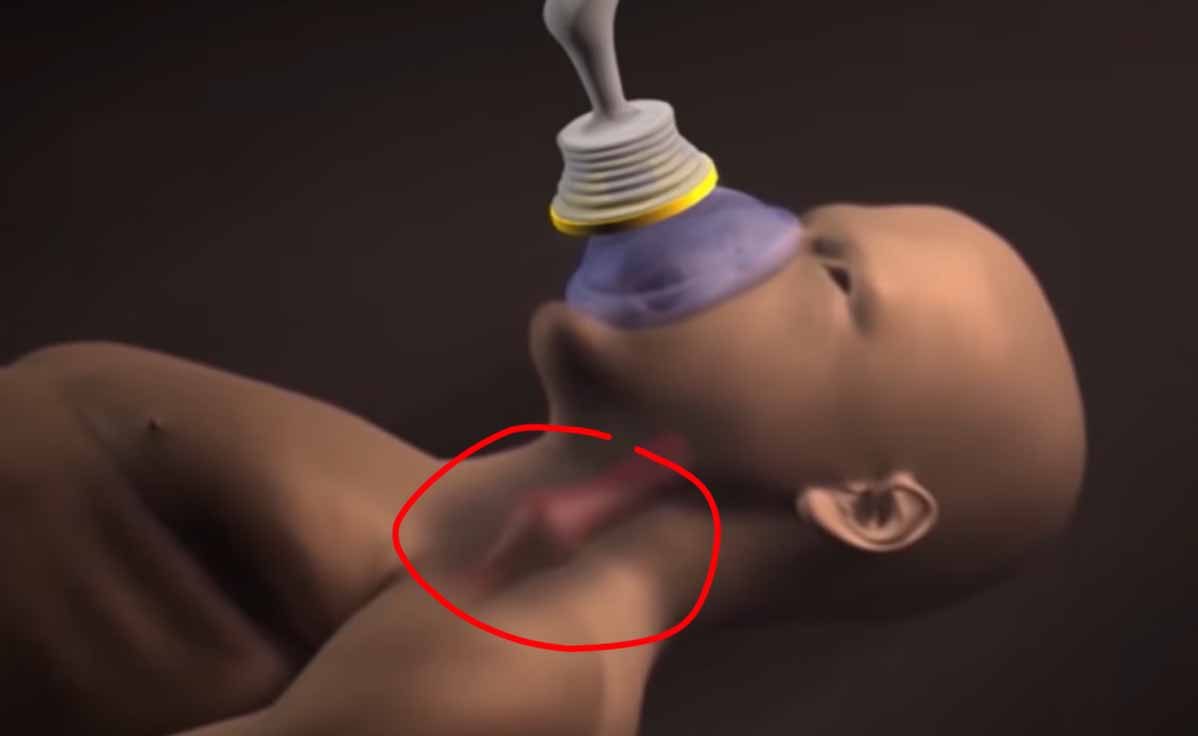
The device uses a mask to generate suction intended to dislodge the foreign object from the airway. According to the manufacturer, it works purely mechanically, without electricity or batteries, and is intended for laypeople. The set includes three single-use masks in different sizes, suitable for people weighing ten kilograms or more. It is said to be developed and produced in Germany.
The manufacturer expressly markets LifeSaveAir as a supplement to, not a replacement for, first aid. Helpers should first call the emergency number 112, give up to five back blows and then perform the Heimlich maneuver up to five times. The device is intended for cases in which these measures fail or cannot be applied. It regularly costs 79 euros (about $89); in its online shop, the company is offering it for 69 euros (about $77) as a promotion tied to the show.
Approach disputed in emergency medicine
Similar suction devices already exist, such as LifeVac from the United States. According to a piece on the website of the "Los Angeles Times", it was invented by Arthur Lih. In Rastenfeld, in Lower Austria, a kindergarten received an emergency anti-choking device, according to the portal austria.com.
According to the portal Gruenderfreunde.de, such suction devices are disputed in emergency medicine. Reliable studies in humans proving their effectiveness are therefore still lacking.