WorldIsrael · Asia
Israel Election: Exit Polls Show No Majority for Netanyahu or Eisenkot
In Israel's election, exit polls put Netanyahu's bloc at 50 seats. Challenger Eisenkot is narrowly ahead but would need the support of Arab parties.
By MarcelUpdated:
Automatically translated from German · may contain errors · Read the original
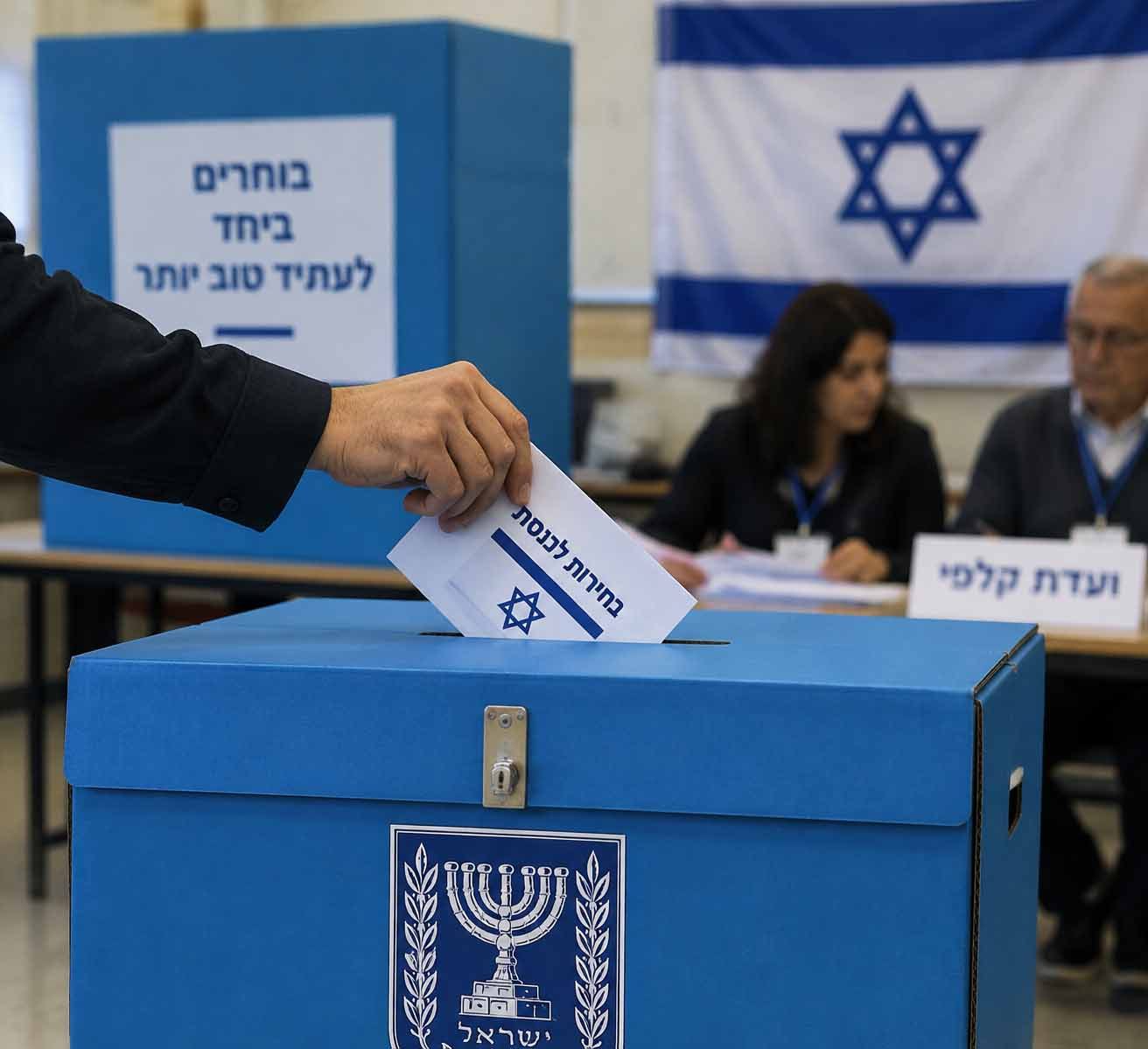
In Israel's parliamentary election on Tuesday, October 27, neither of the two major blocs has won a majority, according to initial projections. According to exit polls by Israel's major TV networks, both Prime Minister Benjamin Netanyahu's bloc and that of his challenger, former military chief of staff Gadi Eisenkot, fall short of the 61 seats needed in the Knesset, the Israeli parliament.
The polls by Kan, Channel 12, Channel 13 and Channel 14 put Netanyahu's camp at 50 seats. In the previous Knesset it held 68 seats. According to the projections by Israel's major TV networks, Eisenkot's bloc wins 52 to 53 seats, putting it narrowly ahead.
Arab parties win 17 to 18 seats in the projections. To reach a majority, the bloc led by Eisenkot would need their support. According to CNN, this is a record for the Arab parties; turnout was also the highest since at least 1999, the network said.
According to the Kan and Channel 13 polls, Netanyahu's Likud is the largest single party with 25 seats. In the last polls before the election, Eisenkot's party Yashar was still ahead, according to the news site Ynet, and his bloc led by two to six seats.
Eisenkot calls projections a vote of no confidence
Eisenkot described the projections as an expression of complete distrust of Netanyahu.
On election day, the electoral commission rejected a request by Likud to extend polling station hours, according to France 24. Eisenkot's party Yashar had opposed an extension.
Campaign centered on Netanyahu himself
It was the first parliamentary election in Israel since the Hamas attack of October 7, 2023. Israel's conduct of the war in the Gaza Strip, the occupation of large parts of southern Lebanon and parts of Syria, and the two wars against Iran were hardly contested during the campaign.
Instead, the focus was on Netanyahu's leadership and character, as well as his role in the security forces' failure on October 7. Also debated were his efforts to exempt ultra-Orthodox Jews from military service and the 2023 judicial overhaul. Critics see the latter as an attack on the country's democratic institutions.
Vote counting begins overnight
The projections are not official results and, like all polls, can be wrong. Vote counting begins overnight. An official result will not be available until election authorities have counted and verified all votes.
The Knesset has 120 seats. With no clear winner, weeks of negotiations are likely to follow before it is decided who will govern Israel.