WorldParis · Europe
Why Students Are Protesting in France: 410,000 Turn Out in Second Wave
French students are protesting teacher shortages, dilapidated school buildings and the Parcoursup university admissions system. The second wave of protests on October 24 led to nearly 1,000 arrests.
By Marcel
Automatically translated from German · may contain errors · Read the original
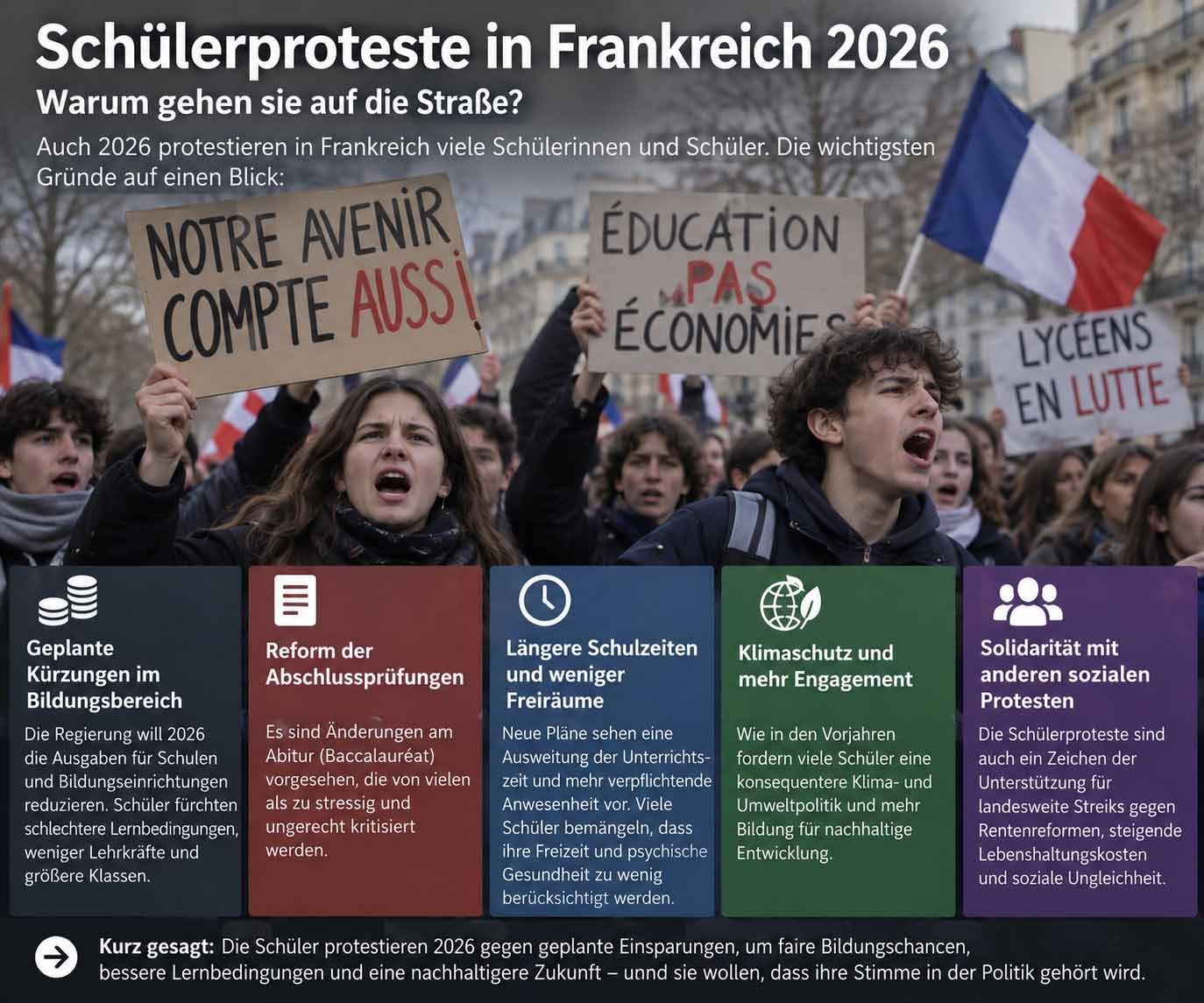
About 410,000 people took to the streets on Saturday, October 24, in the second major wave of student protests in France, according to the Interior Ministry. 70,000 police officers were deployed. The demonstrations were mostly peaceful, but clashes broke out in Paris, Marseille and other cities. Nearly 1,000 people were arrested.
In Nancy, the prefecture of the Meurthe-et-Moselle département banned a demonstration in the city center, citing the risk of renewed serious disruptions of public order. According to the broadcaster France 3, student organizations in Nancy and Metz announced they would demonstrate despite the bans. Some called for joining the Yellow Vests.
Teacher strike near Paris as the trigger
The movement began on September 17 at the Lycée Saint-Exupéry in Créteil, a suburb southeast of Paris. Teachers there went on strike over staff shortages: the school lacked teachers for French, mathematics and economics, as well as supervisors. The next day, students blockaded the school.
The protests quickly spread to other suburbs such as Saint-Denis and then across the country. By early October, hundreds of schools were blockaded or partially closed. Later, unions and the Yellow Vests joined in.
Canceled classes, crumbling buildings and pressure over university access
One of the main grievances is the teacher shortage. Many positions are unfilled, and sick teachers often go weeks without being replaced. Last year, about one in ten lessons was canceled in upper secondary school.
Students also complain about overcrowded classes, often with 30 to 36 pupils, and dilapidated buildings with broken windows, leaking ceilings, rats and cockroaches, and poor ventilation and heating. Many schools are more than 60 years old and not built for heat; in summer, classrooms reach up to 40 degrees Celsius. School days are also long, with classes often running until 6 p.m. or later. Education Minister Édouard Geffray said, according to Austrian broadcaster ORF, that 400 to 500 schools do not meet the required safety conditions.
Criticism is also aimed at Parcoursup, the national online university admissions system introduced in 2018. Many consider it opaque, stressful and socially unfair. They are demanding an end to selection through Parcoursup and the master's platform Mon Master, as well as 250,000 additional university places.
The students are demanding an emergency plan of around 10 billion euros (about $11.2 billion) for more teachers, renovations and smaller classes. A ten-point plan from the unions also calls for 200 euros (about $224) more per month for scholarship recipients, a rent freeze in student residences and better conditions in disadvantaged suburbs.
Hundreds of thousands of demonstrators, thousands of arrests
On October 6, the Interior Ministry counted 266,000 demonstrators, while student organizations put the figure at 450,000. According to the Swiss newspaper Blick, there have been 6,059 arrests since September 28, and 715 police officers were injured.
On October 13, police reported about 160,000 participants, while organizers claimed up to 480,000. The largest day of protest so far came on October 17, when students, unions and Yellow Vests demonstrated together. The Interior Ministry counted about 550,000 people, the unions up to 800,000. There was looting, violence and arson, including at the town hall of Limoges. More than 2,000 people were arrested.
Many of those arrested were minors. There were injuries on both sides, and critics accuse police of violence. In Lens, in northern France, a police grenade tore off the hand of a 15-year-old student, according to ORF. The national police inspectorate is investigating.
Government under pressure to cut spending
The protests come in the final months of President Emmanuel Macron's term, with elections due in 2027. The government is under pressure to cut spending and is planning only modest increases in the budget. Left-wing parties such as La France Insoumise support the movement, which has since merged with issues such as the cost of living and fuel prices.
The government has made concessions, including deploying 3,000 substitute teachers and holding talks on Parcoursup. The students reject these as insufficient.